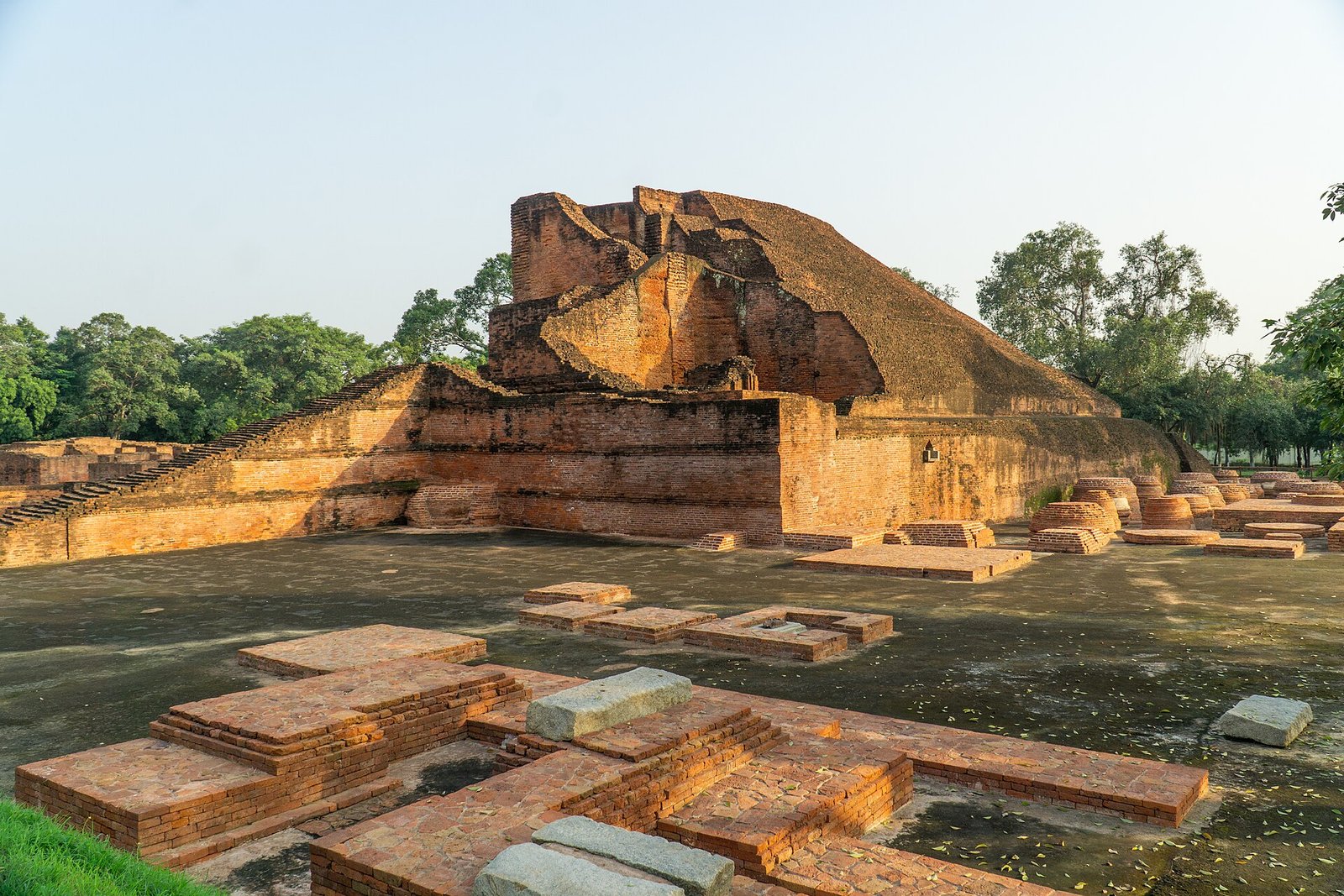
Nalanda: The Secrets of the Ancient Seat of Learning
In the quiet countryside of Bihar lie the ruins of Nalanda, one of the oldest centres of learning in the world. Its name brings back a time when scholars came from across Asia to study and debate here. Let’s look at what made Nalanda special, and what you can see there today.
Read this blog to know more about Places to visit in Bihar.
Rediscovering Nalanda: A Journey Through History
Established during the Gupta dynasty, Nalanda University flourished as an epitome of knowledge from around the 5th century AD. It flourished under the patronage of eminent rulers like Emperor Harshavardhana, attracting scholars from far-flung countries to conduct research on subjects as diverse as philosophy, astronomy, medicine and art. This vibrant intellectual center fostered an intensive exchange of ideas beyond geographical and cultural boundaries.
Cultural Melting Pot and Global Influence
What set Nalanda apart was its multicultural ethos, welcoming scholars from China, Korea, Japan, Tibet, Mongolia, Turkey, Sri Lanka, and Southeast Asia. This diverse community enriched the academic discourse, fostering intellectual exchanges that shaped the course of knowledge dissemination in Asia and beyond. It served as a crucible of ideas, where different philosophies and traditions converged in pursuit of higher truths.
Decline and Legacy: Echoes of a Glorious Past
Despite its illustrious history, Nalanda began to decline around the 12th century, succumbing to political instability and foreign invasions. The once-thriving university gradually faded into obscurity, its ruins lying dormant until the British rediscovered them in the 19th century. Today, Nalanda stands as a poignant reminder of a golden age of learning, its weathered remnants echoing tales of intellectual rigor and scholarly pursuits.
Lessons from Nalanda: Relevance in the Modern World
The legacy of Nalanda extends beyond its archaeological remains. It embodies timeless lessons in education, emphasizing critical thinking, interdisciplinary studies, and global collaboration. These principles resonate in contemporary educational paradigms, offering insights into fostering inclusive learning environments that inspire creativity and intellectual curiosity among students.
Personal Reflections: A Pilgrimage to Nalanda
Visiting Nalanda is akin to embarking on a pilgrimage through time, where the echoes of ancient wisdom resonate in the stillness of its ruins. Standing amidst the remnants of monastic cells and lecture halls, one cannot help but feel a profound connection to the scholars who once walked these hallowed grounds.
Tips & Tricks for Travelers
If you plan to visit Nalanda, consider exploring the nearby town of Rajgir, which served as an important center during ancient times. Engage a local guide to enrich your understanding of the site’s historical significance and architectural layout. Wear comfortable attire and sturdy footwear, as exploring the expansive ruins requires navigating uneven terrain.
How to reach here
By Air: The nearest major airport is Patna Airport (Jay Prakash Narayan International Airport), approximately 90 kilometers from Nalanda. From the airport, you can hire a taxi or take a bus to reach Nalanda. The journey by road typically takes around 2-3 hours, depending on traffic conditions.
By Train: The nearest railway station to Nalanda is Bihar Sharif Railway Station, located about 15 kilometers away. Bihar Sharif is well-connected to major cities like Patna, Kolkata, Delhi, and Varanasi via regular trains. From Bihar Sharif Railway Station, you can hire a taxi or take a local bus to reach Nalanda.
Book a train ticket from: Indian Railways
By Road: Nalanda is well-connected by road to major cities and towns in Bihar and neighboring states. National Highway 20 passes close to Nalanda, making it easily accessible by car or bus. Patna, the capital city of Bihar, is approximately 90 kilometers away and is a common starting point for those traveling by road. The journey from Patna to Nalanda takes about 2-3 hours by car, depending on traffic conditions.
Local Transport: Within Nalanda and its surroundings, local transport options include auto-rickshaws, cycle-rickshaws, and taxis. Hiring a local guide is advisable to navigate the historical sites and gain deeper insights into Nalanda’s rich cultural and educational heritage.
Top photo (Sariputta Stupa, Nalanda): Sumitsurai / Wikimedia Commons, CC BY-SA 4.0